
It’s worse than you think. “The odds of running out of money in retirement are significantly greater than prior studies had concluded,” according to a recent Market Watch article.
This concern was identified by Edward McQuarrie, professor emeritus at Santa Clara University in his research that looked at historic periods in which U.S. retirees struggled to maintain their standard of living. What year was the worst? No, it wasn’t during the ’29 or ’87 market crashes, or the Great Recession of 2008. It was 1965 because “both the stock and bond markets embarked on a sustained period of negative inflation-adjusted returns.” Thus, he concluded that today’s retirees are in danger of outliving their money.
But he also identified a few ways to reduce the odds.
One suggestion that caught my attention (of course) was the addition of residential real estate to a retiree’s/near retiree’s portfolio. He added that historical data is limited, but he concluded that “the addition of real estate … was generally successful” adding that for investors outside the U.S. it was “sometimes remarkably so.”
According to the article, McQuarrie indicated that the key is how the real estate holdings perform. And that’s where Lloyd Jones comes in. As an owner/operator, we are proactive in the management and asset management of our real estate assets. Our investors know that through our intense underwriting and hands-on management, our investment track record of investor returns is outstanding.
Recently, we have adjusted our approach. For the past ten years, the play has been value-add multifamily real estate. We acquired apartment communities, upgraded them, enjoyed the income – and really enjoyed the appreciation. But now we are selling because caps rates are falling to crazy levels. With yields about five to six percent, it’s time to look at new opportunities.
And there are opportunities – fabulous opportunities to provide you added income in your retirement.
1) Senior housing. The past few years with Covid have devasted the industry with low occupancies and rising labor costs. But there has been virtually no new product. And now, we are recovering, and the demand has surpassed supply – radically. And there has been no construction to meet the current demand. And within the next five years, the tsunami of baby boomers requiring assisted living will be upon us. Then what? (The oldest baby boomers turned 75 last year; entrance to senior housing begins at about 80.) Even with a massive expansion of construction activity, there will still be a supply shortage. It’s time to invest in senior housing. You can expect to earn a yield of approximately 8%.
2) The other opportunity we are excited about is the hotel industry -another victim of Covid. We are focusing on extended-stay opportunities. In the right location, and with the right oversight, they will yield about 10% annually. Sometimes, they can be converted to senior housing (and in a lot less time than it takes to build from the ground up). Lloyd Jones has created a new hotel acquisition division to aggressively analyze investment opportunities.
We invite you to join us as we take advantage of this very timely- and exciting – opportunity.
Visit lloydjonesllc.com for current investment opportunities.
The opportunity is irresistible. Everything points to an incredible rebound in senior housing starting right now and lasting for the next several decades. It is time to invest in senior housing.
Back in 2018 and 2019, the assisted living/memory care sector was overbuilt. Occupancy was suffering.
Then came Covid. 2020 and 2021 devastated senior housing. Occupancy rates fell. Staffing was difficult – and expensive. Lower interest rates were offset by higher operating expenses and lower occupancy.
Now, it’s 2022. And we’re recovering. And we have four years of built-up demand because there’s been no new supply of senior housing. Demand has caught up with supply. And it takes at least two years to construct a new community. So, the demand will continue. The future of senior housing looks incredible!
Look at this graph!
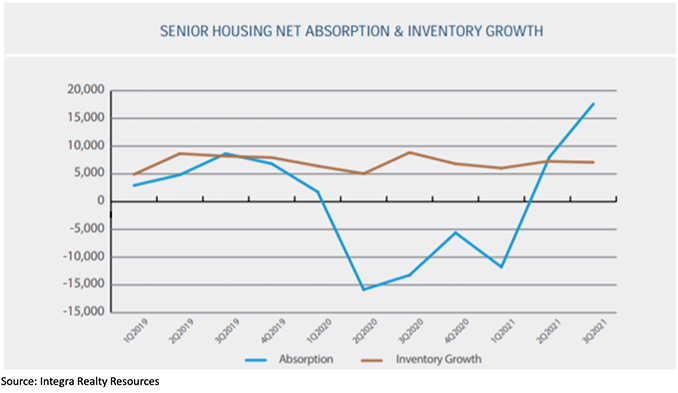
A report by Integra Realty Resources has forecast that “senior housing demand will increase sharply through 2023, with pent-up demand filling the void.”
And then the baby boomers are coming!!! The oldest baby boomers turned 75 last year. Seniors enter senior housing at about 80 years old, so within the next five years, the tsunami will hit! And Lloyd Jones will be ready.
Join us as we invest in senior housing. It’s something we have been doing for many years, but this is beyond any previous opportunity. Visit lloydjonesllc.com to see our current opportunities.
What if this had been your retirement portfolio?
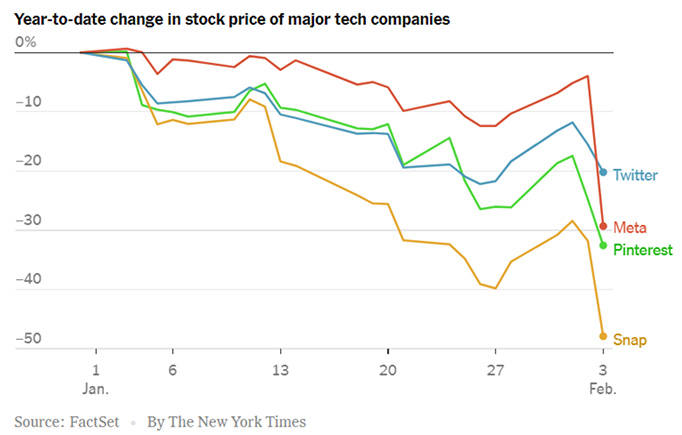
Granted, the graph can reverse itself tomorrow; that’s the nature of the stock market. But do you want to gamble your retirement savings on it?
There is a better solution. Senior housing is poised for an extraordinary run. For the past four years there has been no senior-housing development. No new product. Covid stalled the industry with falling occupancies, increasing labor costs.
But today, we’re recovering, and it’s a different story. The demand has surpassed supply – drastically. The absorption rate is going straight up. A report by Integra Realty Resources has forecast that “senior housing demand will increase sharply through 2023, with pent-up demand filling the void.”
And that demand doesn’t include the oncoming tsunami of baby boomers, the oldest of which just turned 75 last year. The average senior-housing entrance age is about 80, so the demand in the next five years will be incredible – and there’s no supply. It takes at least a couple of years to develop a new community, so the demand will continue.
So, I invite you to join us as we invest in senior housing. We have added two new properties to our senior portfolio in the past couple of weeks and have more on the books. Your investment will earn you a reliable 8% or so, and it will be steady – no peaks and valleys like the stock market.
For details on senior housing opportunities, visit https://lloydjonesllc.com.
Stuart Keller of Lloyd Jones Real estate, sees a tremendous investment opportunity. Stuart and his partners are developing incredible senior-living communities for the 60% of seniors who are currently underserved.
If you want to learn about their creativity and innovative strategies, such as hotel conversions, and learn about this BOOMING investment opportunity, you got to tune in to today’s episode!
“Senior living is all about the operating margin. If you got one more resident for an assisted living or a memory care unit, that one extra unit might necessitate additional staff members based on the staffing ratio that is required by state law. Your revenue might go up, but with the increased staffing ratio, your operating margin might go down. It’s definitely one unique component that not everybody might understand how to underwrite a senior living deal.”
The number of baby boomers turning retirement age is growing substantially. With the growing aging population, the existing senior living facilities and communities will be 900,000 to 1.5 million units short by 2030. Join Daniel Nickles and Stuart Keller, SVP Investor Relations at Lloyd Jones, as they discuss this senior housing crisis and the potential opportunities. Lloyd shares that the properties being developed are targeting the top 20% of earners and the bottom 20% in the form of tax credit communities. The opportunity now is to provide the ignored 60% middle market who cannot afford the brand new construction deals and are not qualified to live in the credit communities. If you are looking for other passive investing opportunities, then this episode is for you. So, tune in and enjoy!
Chris Finlay of Lloyd Jones is back for Part 2 of Tee It Up with Phil Melton. For this part of the conversation, they dive into managing the challenges of operating senior housing facilities and serving residents during the COVID crisis.
Our next guest on the Tee It Up with Phil Melton video podcast is Chris Finlay of Lloyd Jones. No matter how difficult things may get during this COVID-19 pandemic, as lenders and borrowers or tenants and property managers, at the end of the day, we’re all in this together. That was a key takeaway from the conversation here in Part 1.